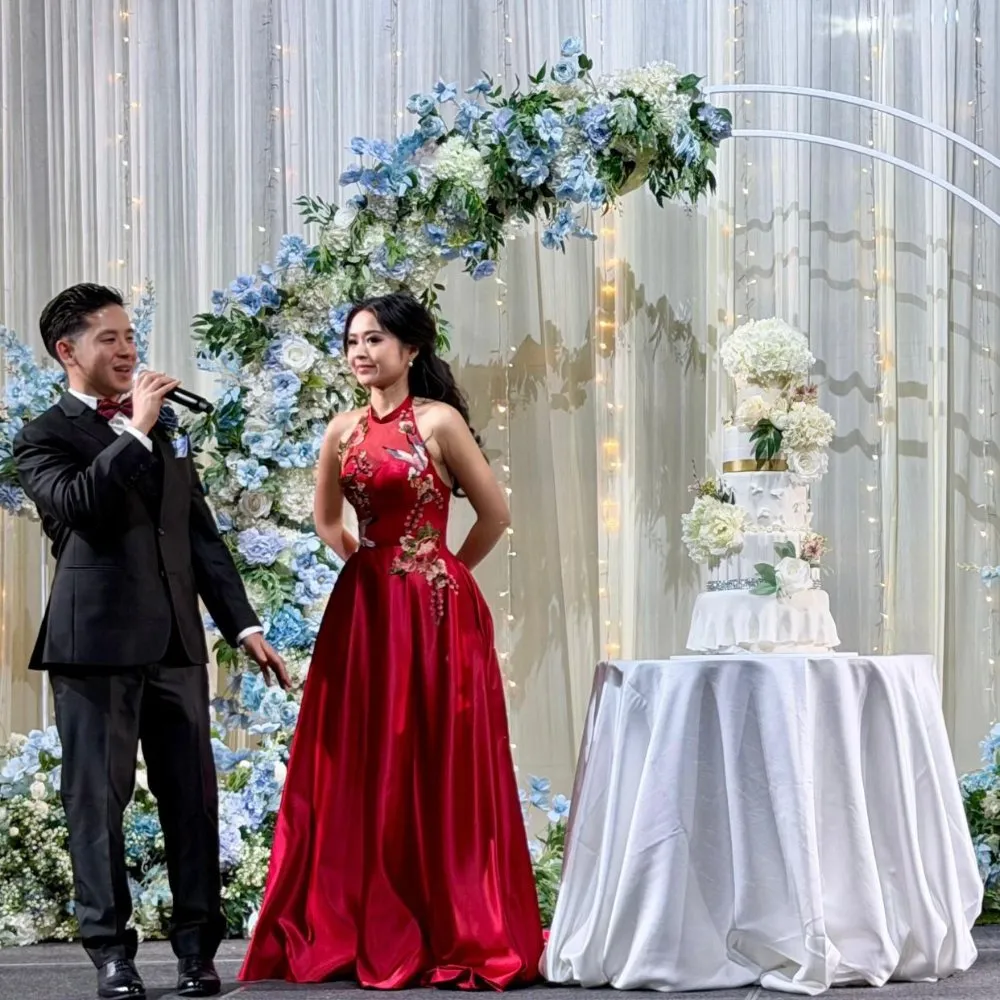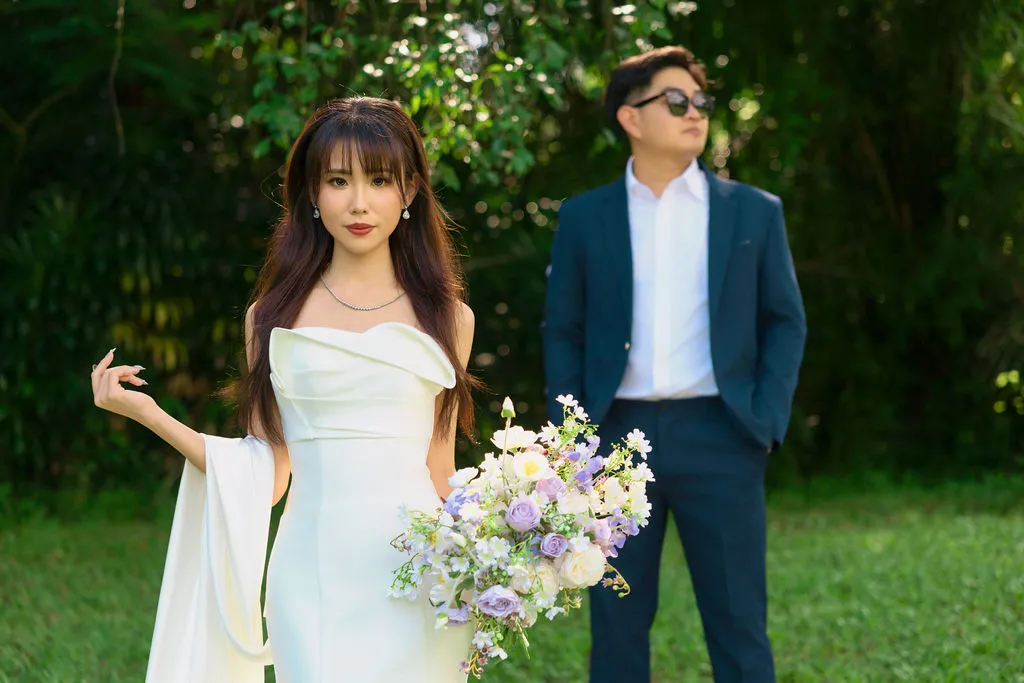

For the bride, it is also the first family event of your wedding season where everyone takes photos. So alongside the item lists and the red packets, you will want to know what to wear. This guide covers all of it: the process, the items by dialect, the pin jin, what to say, and the outfit question brides often bring to our studio.
Guo Da Li at a Glance
| What it is | The betrothal gift exchange between the two families, part of the traditional Three Letters and Six Etiquettes (三书六礼) |
| When | Usually 2 to 4 weeks before the wedding, on an auspicious date, mid-morning |
| How long | Usually under an hour, plus a meal or photos after |
| Who goes | The groom, with a senior female relative “of good fortune” or a matchmaker, and often his parents |
| Who receives | The bride’s parents, at the bride’s family home |
| What the bride wears | A smart red, pink or warm-toned dress or modern cheongsam. Avoid black and all-white. |
What Is Guo Da Li?
Guo Da Li translates loosely as “passing the big gifts”. Traditionally, a couple was only considered formally engaged once this exchange had taken place, and wedding invitations went out afterwards. The gifts are a thank-you to the bride’s parents, and almost every item carries a wish for the couple: sweetness, wealth, harmony and children.
Today most Singapore couples keep Guo Da Li because it matters to their parents, and because it is a gentle way for the two families to meet properly before the big day. It is also one of the customs families feel most free to simplify, which we cover further down.
When Is Guo Da Li Held?
Most Singapore families hold Guo Da Li two to four weeks before the wedding. Some older references give one to two weeks, so if your parents remember it differently, they are not wrong. Follow what your families agree on.
The date is usually picked from the Chinese almanac (通书), or by a feng shui master who reads both of your birth dates. Families generally avoid the Hungry Ghost month and the Qing Ming period. The ceremony itself tends to be in the late morning, and there is no officiant or fixed script.
Who Attends Guo Da Li?
The groom delivers the gifts, usually with a matchmaker or a senior female relative who is considered to have good fortune: married, with children and in good health. In Cantonese families this role is often filled by a Dai Kum Jie (大妗姐).
Whether the groom’s parents come along differs from family to family. Some guides say they do not need to attend, while in other families the groom’s mother is the one who hands over the betrothal money and puts the gold jewellery on the bride. Many families also like the groom’s party to be an even number of people.
On the bride’s side, her parents receive the gifts. In the past, the bride stayed out of sight for part of the visit. Today, most brides are there for the whole morning, and they are in the photos.
The Guo Da Li Process, Step by Step
Every family runs it a little differently, but a typical Singapore Guo Da Li follows this order:
- The groom’s party arrives with the gifts packed in red baskets or boxes.
- The matchmaker or senior relative blesses the bride’s parents and presents the gifts, often saying an auspicious phrase as each item is handed over.
- The bride’s family checks the items against the agreed list.
- Tea is served and both families confirm wedding-day details such as the fetching time.
- The betrothal money (pin jin) is handed over, usually to the bride’s parents.
- Gold jewellery is presented. In families that give si dian jin (四点金, four pieces of gold), the groom’s mother often puts it on the bride.
- The bride’s family returns the hui li (return gifts) and the dowry, usually on the same day.
- Photos and a meal, and then everyone goes home happy.
After the ceremony, the bride’s family traditionally gives out the wedding pastries (喜饼) to relatives along with the wedding invitations.
Guo Da Li Items List
Items always come in even numbers, and six or eight of each is a popular choice. Whatever your dialect, these are the items most Singapore families include:
| Item | What it means |
|---|---|
| Dragon and phoenix candles (龙凤烛), 2 pairs | The dragon is the groom, the phoenix is the bride. Part of the set goes back in the return gifts and is lit on the wedding morning. |
| Mandarin oranges | Good fortune and wealth |
| Canned pig trotters | For the bride’s mother, as thanks for raising her daughter |
| Two bottles of liquor | For the bride’s father |
| Wedding pastries (喜饼) | Shared with relatives to announce the wedding |
| A pair of coconuts | 椰 sounds like 爷: a wish for many generations |
| Dried longan, red dates, lotus seeds, lily bulbs | Children soon, good luck, many children, a hundred years of harmony |
| Diaper money (a separate red packet) | A thank-you to the bride’s mother for raising her |
| Betrothal money (聘金, pin jin) | The main red packet, presented to the bride’s parents |
Guo Da Li Items by Dialect
This is where families differ most. Use this as a starting point and confirm with the elders on both sides.
| Dialect | Items you will often see |
|---|---|
| Hokkien | Red-and-black baskets, pig trotters (a must for many families), rice candy, mee sua, ang ku kueh. Gold dragon-and-phoenix bangles are common. Sugar cane often comes back in the return gifts, for a marriage that is “sweet from head to tail”. |
| Teochew | Rattan baskets, si dian jin, peanut and sesame candy (for “a thousand children and ten thousand grandchildren”), bananas, and lao ma gor if the bride’s grandmother is living. |
| Cantonese | Dragon and phoenix bangles (龙凤鈪), a whole roast pig, dried seafood such as abalone, sea cucumber, scallops and fish maw, and lotus-paste wedding pastries. The return gifts often include trousers or a suit for the groom, because 裤 sounds like 富 (wealth). |
| Hakka | Abacus seeds, four-colour pastries, dragon and phoenix bangles, and sugar and salt. |
Pin Jin: How Much Is Given and Returned?
There is no fixed rate for pin jin in Singapore. It is a token of respect, and the amount usually includes the number 8 for prosperity. Amounts we hear about most often range from S$888 or S$1,888 for a simple set to S$6,888 or S$8,888 for a fuller one. Some families also use 9, which sounds like “long-lasting”.
Most bride’s families do not keep the whole amount. Many keep a token portion and return the rest, so that it never looks as if they are “selling” their daughter. Others split it closer to half. Agree on this quietly between the families beforehand so nobody is surprised on the day.
Hui Li: What the Bride’s Family Returns
The bride’s family usually returns about half of the food items, keeping the liquor and the red packet. To the returned items they add their own gifts, such as:
- A watch, belt or wallet for the groom, with a red packet
- Two bottles of orange juice or syrup to balance the liquor
- Huat kueh (发糕) for prosperity
- A red ruler and red umbrella in some families
The dowry (嫁妆) usually travels back the same day. It often includes the tea set you will use for your tea ceremony, red bedding, bedside lamps (灯 sounds like 丁, a wish for children), a sewing kit, red slippers and the “descendant pail” set (子孙桶).
What Should the Bride Wear for Guo Da Li?
Brides ask us this often, so here is our answer as a bridal studio.
Guo Da Li is a smart but not formal occasion. You are at home, you will sit, stand, pour tea and pose for many photos with relatives, and in Singapore you will probably be warm. So you want something festive and polished that you can move in.
Colours to choose
- Red is the classic choice and always appropriate.
- Pink, coral, peach, blush and champagne are soft, auspicious and photograph beautifully indoors.
- A touch of red works too: red embroidery, a red belt or red shoes on a soft-coloured dress.
Colours to avoid
- Black, and all-white outfits, because both are associated with funerals in Chinese culture. Ivory with colourful embroidery is usually fine, but check with your elders if you are unsure.
- Very dark or dull tones such as navy, dark grey and deep purple.
Styles that work
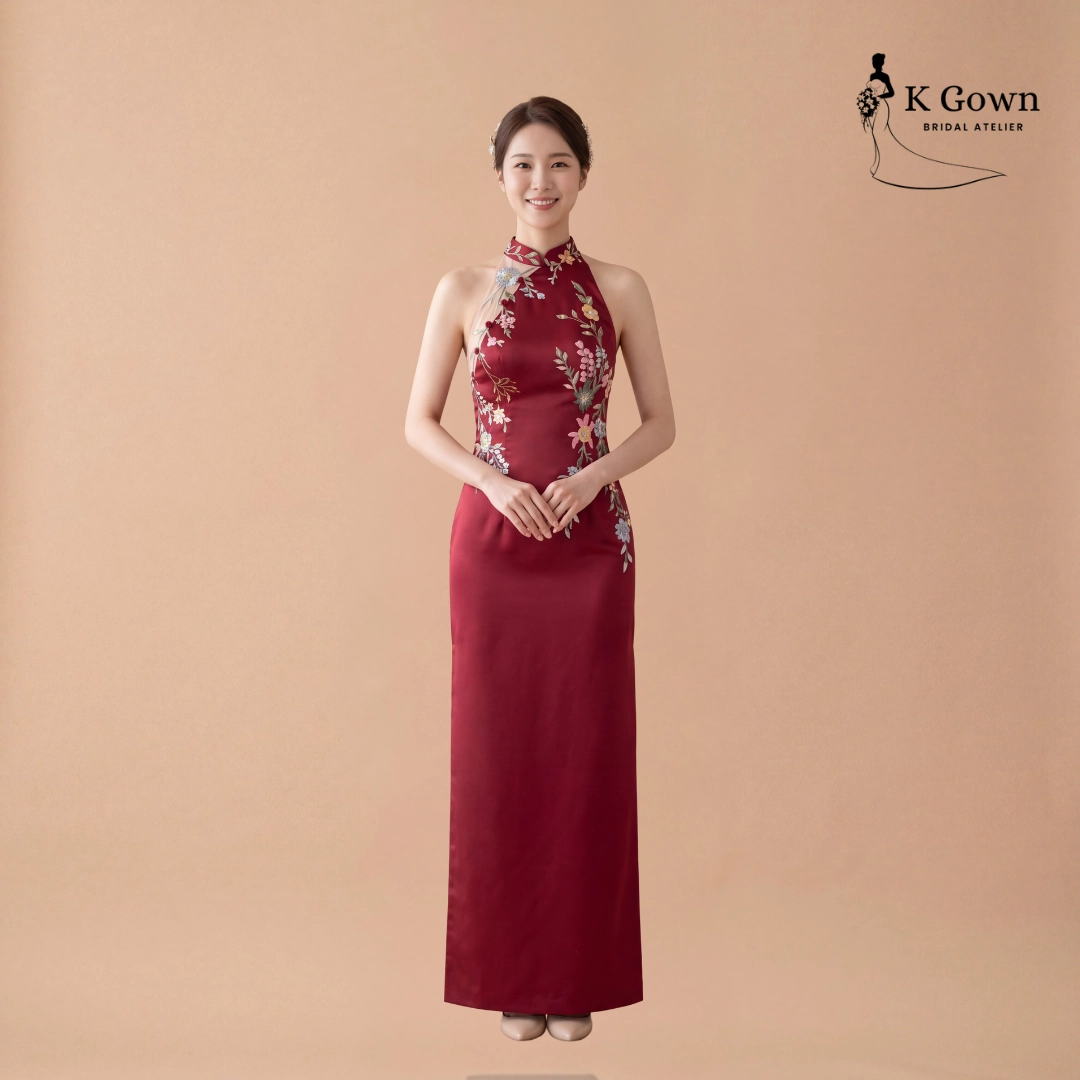
- A modern cheongsam at knee or midi length is the most popular choice. A mandarin collar, floral embroidery or a little lace gives you a sense of occasion without looking like you are dressed for the banquet.
- A simple red or pink dress in a comfortable fabric is just as correct.
- A coordinated top and skirt set is a relaxed option many brides choose for a smaller family Guo Da Li.
Avoid shorts, very casual wear and anything too revealing. Elders will be in the room, and the photos will be shared on every family chat group.
Our stylist tips
- Plan for the gold. If your future mother-in-law will put si dian jin or bangles on you, a simple neckline lets a necklace sit properly, and a sleeveless or three-quarter sleeve makes bangles easy to slip on.
- Do the sit test. You will sit through most of the morning, so try your outfit seated before you commit. Fitted cheongsams need a slit or some stretch.
- Keep hair and makeup light. A soft, fresh look suits a morning at home. Save your full bridal look for the actual day.
- Save your statement look for the tea ceremony. Many brides keep the full qun kua or a statement cheongsam for the wedding day, and wear something lighter for Guo Da Li.
What should the groom wear?
A mandarin-collar shirt, a smart shirt with tailored trousers, or a light-coloured suit is enough. A red pocket square or tie ties him in with the bride.
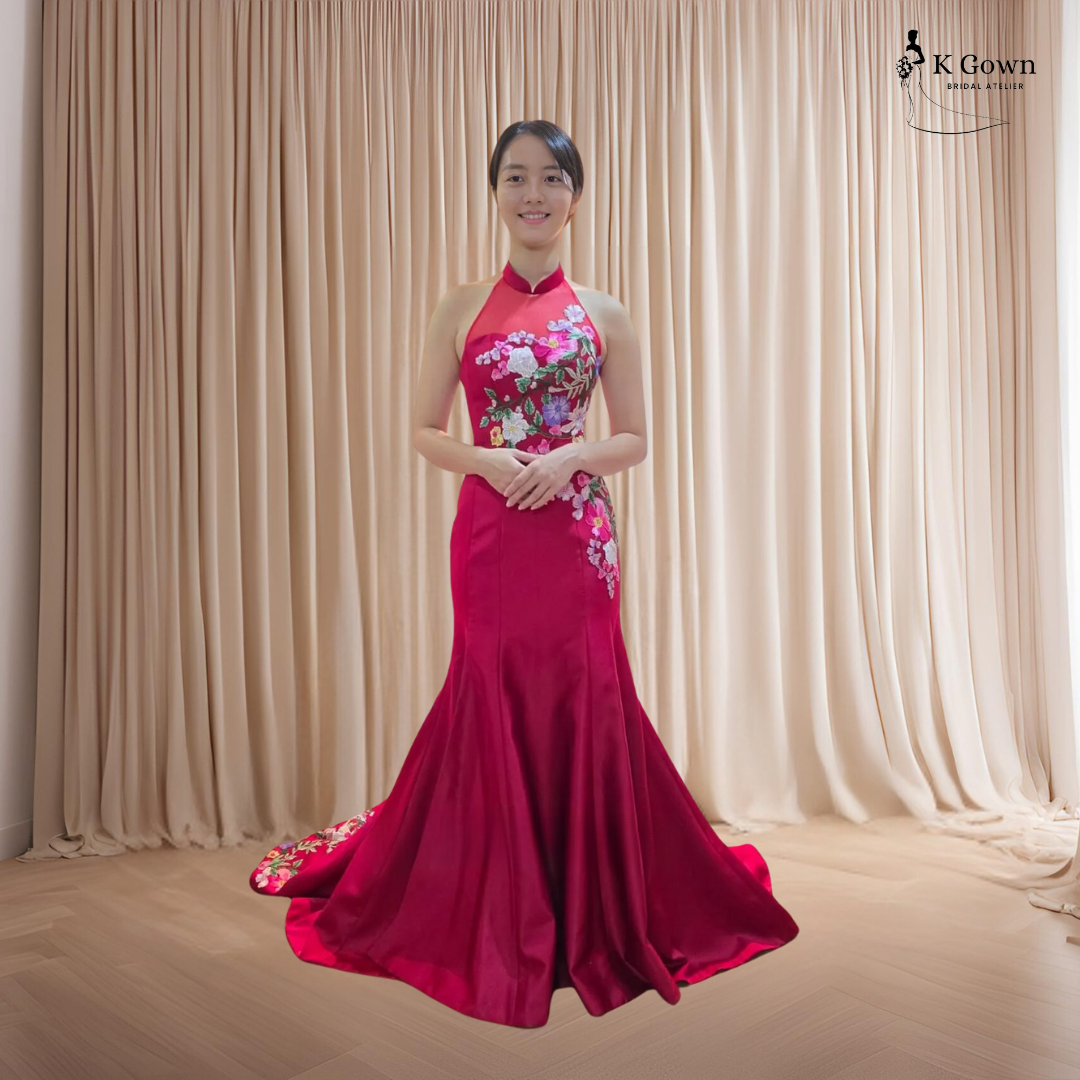
If you are already planning a cheongsam for the wedding day itself, our Bridal Gown and Suit Rental Package includes one bridal gown and one bridal cheongsam, both with alteration, plus two groom suits. You can browse a few of our modern cheongsam designs, such as this high-collar cheongsam gown with pastel pink lace and this red cheongsam-inspired gown for plus-size brides.
What to Say at Guo Da Li
There is no script you have to memorise. The matchmaker or the groom’s elder usually says a blessing as each item is presented, and the families chat over tea. If you would like a few phrases ready, these are the ones you will hear most:
| Phrase | Pinyin | Meaning |
|---|---|---|
| 百年好合 | bǎi nián hǎo hé | A hundred years of harmony |
| 早生贵子 | zǎo shēng guì zǐ | May you have children soon |
| 鸿运当头 | hóng yùn dāng tóu | Good luck ahead |
| 甜甜蜜蜜 | tián tián mì mì | A sweet, loving marriage |
| 大吉大利 | dà jí dà lì | Great luck and prosperity |
Is Guo Da Li a Must?
No. Guo Da Li is not a legal or religious requirement, and you do not need it to register your marriage at ROM. It is a family custom, so whether you hold it, and how big it is, is up to your two families.
Many Singapore couples now hold a simplified Guo Da Li: wedding pastries, two bottles of liquor, the gold jewellery and a red packet, followed by a family lunch. The items most often dropped are the furniture dowry, fresh pig trotters and the whole roast pig. The pin jin, the gold and the candles are usually kept.
Christian and Catholic families often keep a gentle version too. They exchange the gifts and the blessings over a meal and simply leave out the ancestral altar prayers.
Should Guo Da Li Follow the Groom’s or the Bride’s Dialect?
Families genuinely disagree on this one. Some follow the bride’s dialect, because the gifts are going to her family. Others follow the groom’s dialect, because his family is presenting them. A common middle ground is to use the groom’s list and add any items the bride’s mother considers a must.
Whichever you choose, share the list with the other side early so the return gifts match.
Frequently Asked Questions
Is Guo Da Li a must?
No. Guo Da Li is a family custom, not a legal or religious requirement, and it is not needed for ROM. Many Singapore couples hold a simplified version with pastries, liquor, gold jewellery and a red packet, followed by a family lunch.
How many weeks before the wedding is Guo Da Li?
Most Singapore families hold Guo Da Li two to four weeks before the wedding, on an auspicious date picked from the Chinese almanac. Some older references give one to two weeks, so follow what your families agree on.
Does the bride need to be present at Guo Da Li?
Traditionally the bride stayed out of sight for part of the ceremony, but today most brides attend the whole morning and appear in the family photos. If the groom’s mother is giving gold jewellery, she will often put it on the bride during the ceremony.
Do the groom’s parents attend Guo Da Li?
It depends on the family. The groom usually goes with a matchmaker or a senior female relative of good fortune. In many families the groom’s mother also attends to hand over the betrothal money and gold, while other families leave the groom’s parents at home.
What colour should the bride wear for Guo Da Li?
Red, pink, coral, peach, blush or champagne are all good choices, or a soft colour with a touch of red. Avoid black and all-white outfits, because both are associated with funerals. A knee or midi-length modern cheongsam or a simple festive dress is ideal.
How much pin jin is given in Singapore?
There is no fixed rate. Common amounts include S$888 or S$1,888 for a simple set and S$6,888 or S$8,888 for a fuller one, usually ending in 8 for prosperity. Many bride’s families keep a token amount and return the rest.
Should Guo Da Li follow the groom’s or the bride’s dialect?
Both are common. Some families follow the bride’s dialect because the gifts go to her family, and others follow the groom’s because his family presents them. A popular compromise is to use the groom’s list and add the bride’s mother’s must-have items.
Your Next Family Moment: The Tea Ceremony
Guo Da Li is the warm-up. On the wedding day itself, you will serve tea to both families, usually in your most traditional outfit of the day. Our guide to the Chinese tea ceremony sequence walks you through who to serve first, what to say and what to wear.
If you are still deciding on your wedding day outfits, book a fitting at K Gown. Bring your schedule for the day and we will help you plan each look, from your cheongsam to your march-in gown. For the full picture on budget, see how much a wedding costs in Singapore.
Customs vary between families and dialect groups. This guide draws on Singapore wedding resources including the National Library Board and Roots.sg, and on what our brides tell us. When in doubt, ask the elders in both families.